 KnotweediD
Japanese knotweed
One plant manages to unsettle mortgage lenders, stall house sales and start neighbour disputes across the UK. Here's the full picture - how to recognise it, what the law actually says, and what to do about it - from PCA-accredited surveyors.
 Curated by Alexander White, PCA Certificated Japanese Knotweed Surveyor (CSJK) · Updated July 2026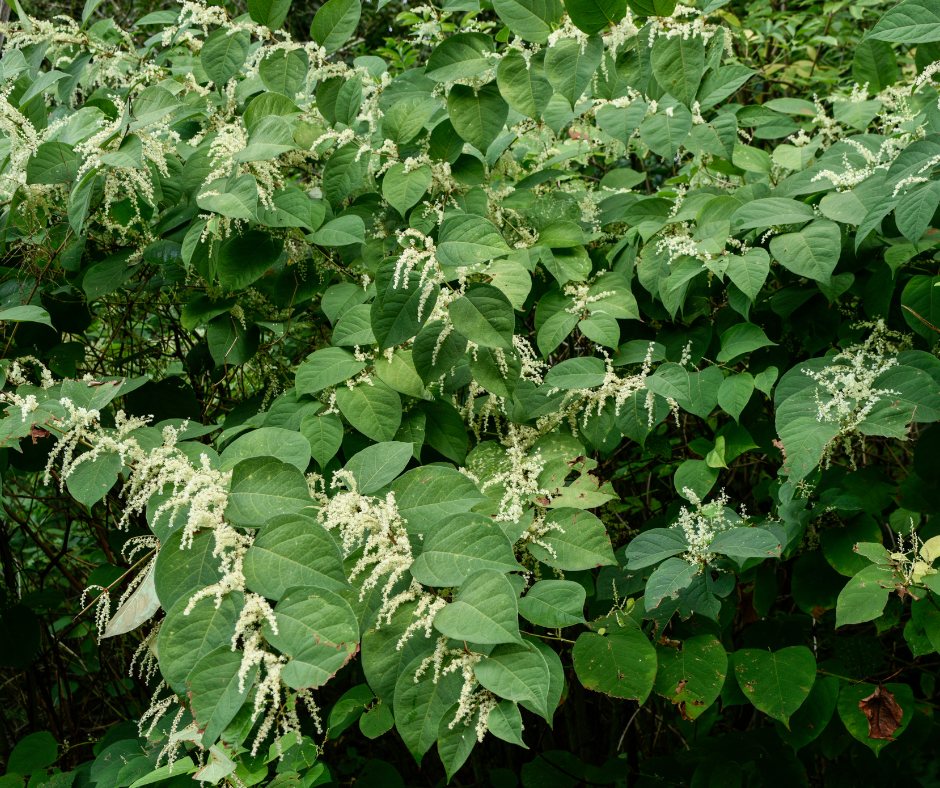
What it is, in one minute
Japanese knotweed (Reynoutria japonica) arrived in Britain as a prized Victorian ornamental and escaped into one of the country's most persistent invasive plants. It spreads underground through rhizome - root-like stems that can regrow a whole plant from a fragment - and above ground it forms dense, bamboo-like stands that crowd out everything else.
It doesn't poison people or pets, and it rarely "destroys foundations" the way headlines suggest - the real damage is financial and legal: lender caution, complicated sales, and disputes when it crosses boundaries.
How to recognise it
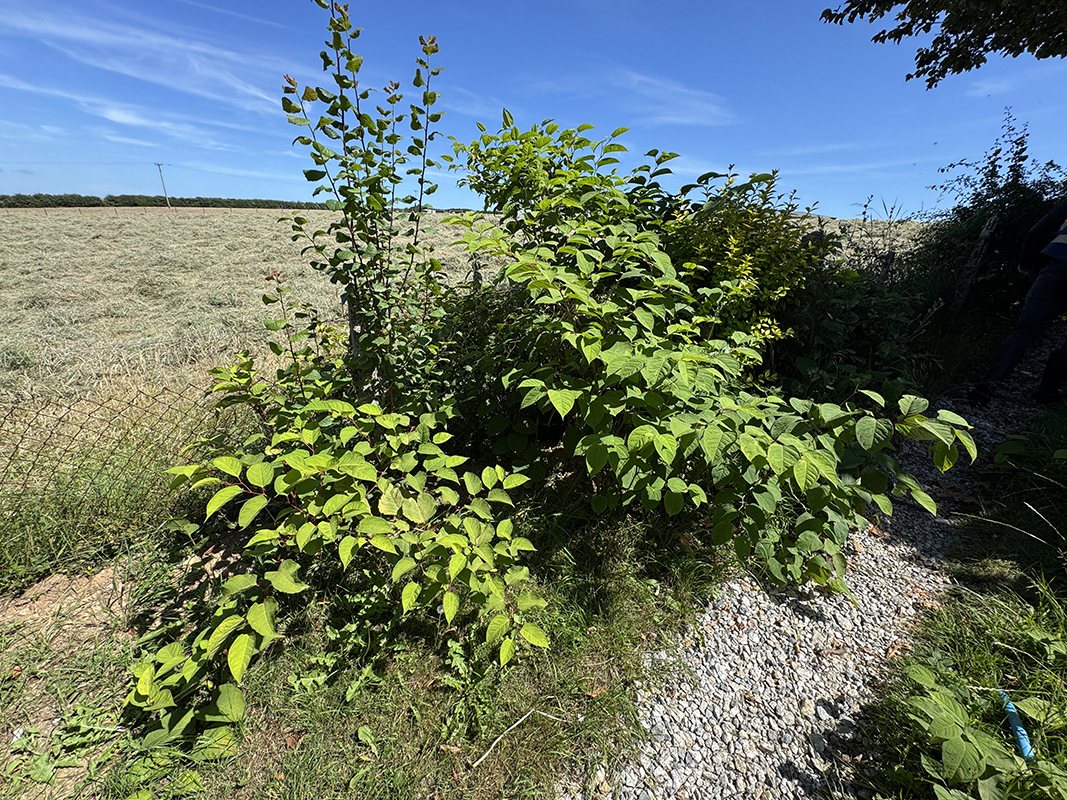
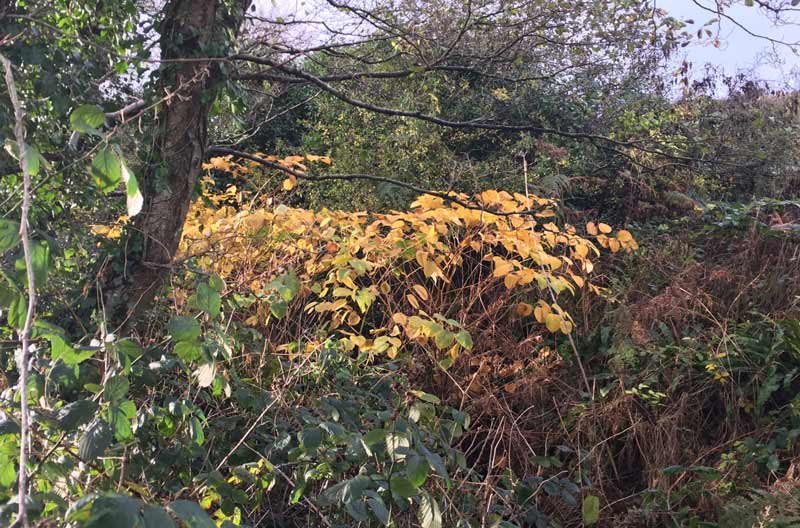
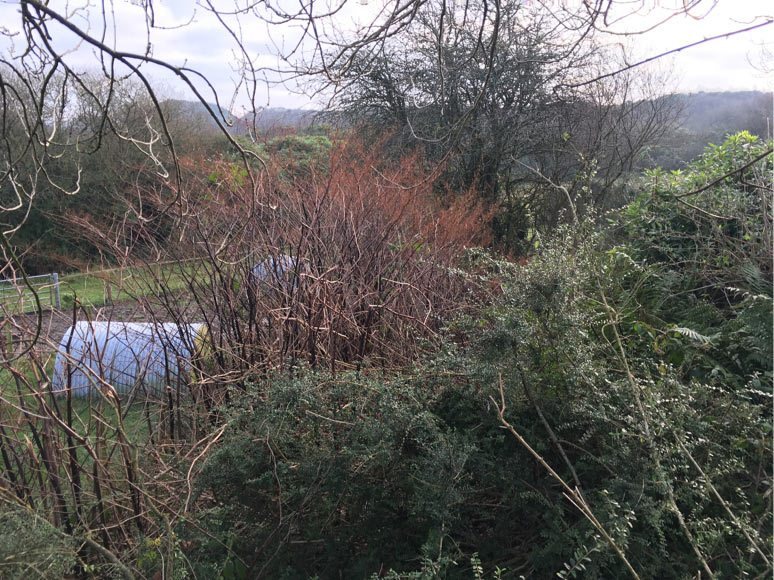
Four features, taken together, separate knotweed from every common look-alike: shield-shaped leaves with a flat base, a zig-zag leaf arrangement, hollow bamboo-like stems flecked with purple, and dense 1-3m stands - plus creamy-white flower tassels in late summer. It transforms with the seasons:

Not sure what you're looking at?
Answer five quick questions about the plant in front of you - or snap a photo in the app for a verdict in seconds, with optional confirmation by a PCA CSJK accredited surveyor.
Try the free checker →Every guide, by question
Identify it
What does Japanese knotweed look like? How to identify Japanese knotweed, feature by feature 5 plants mistaken for Japanese knotweed Knotweed vs bindweed: the most common mix-up Japanese knotweed in winter When does Japanese knotweed flower?Understand it
How fast does Japanese knotweed grow? How deep do the roots go? Is Japanese knotweed poisonous?Property, money & the law
Knotweed, mortgages & house sales Declaring knotweed when selling: the TA6 form Japanese knotweed and the law in the UK Telling a neighbour: a template letter Japanese knotweed statistics UK The knotweed glossary My neighbour has knotweed - what are my rights?Deal with it
How to get rid of Japanese knotweed What removal actually costs Does it come back after treatment? iD Pro for agents, landlords & conveyancersThe short answers
Is it illegal to have knotweed? No. It's an offence under the Wildlife and Countryside Act 1981 to plant it or cause it to grow in the wild, and letting it spread onto a neighbour's land can be a private nuisance - a civil matter. Having it on your own land breaks no law.
Will it stop a mortgage? Usually not, if there's a professional treatment plan with an insurance-backed guarantee. Silence and surprises are what stop mortgages.
Can I treat it myself? Best not: cutting and digging spread it, the material is controlled waste, and lenders want professional paperwork. Confirm first, then get a specialist plan.
This guide is general information and a first-step aid, not a professional survey or legal advice. For a property sale, mortgage application or dispute, always obtain a confirmed survey from a PCA-accredited Japanese knotweed specialist.